? What Tolerance Grades Can Turning, Milling, Planing, Grinding, Drilling, and Boring Achieve?
We work with machining every day, but do you know what tolerance grades can be achieved by turning, milling, planing, grinding, drilling, and boring?
Tolerance grade refers to the level that determines the degree of dimensional precision. The national standard (GB) specifies 20 grades, from IT01, IT0, IT1, IT2 to IT18. A larger number indicates a lower tolerance grade (lower machining precision), a larger allowable variation range (tolerance value), and easier machining.
Product components have different functional requirements, which dictate the needed machining precision and thus the choice of machining method and process. This article introduces the machining precision achievable by common methods such as turning, milling, planing, grinding, drilling, and boring.
? IT Standard Tolerance Grade Table
| Basic Size (mm) | IT01 | IT0 | IT1 | IT2 | IT3 | IT4 | IT5 | IT6 | IT7 | IT8 | IT9 | IT10 | IT11 | IT12 | IT13 | IT14 | IT15 | IT16 | IT17 | IT18 | |
|---|---|---|---|---|---|---|---|---|---|---|---|---|---|---|---|---|---|---|---|---|---|
| Over | Up to | μm | μm | μm | μm | μm | μm | μm | μm | μm | μm | μm | μm | μm | mm | mm | mm | mm | mm | mm | mm |
| - | 3 | 0.3 | 0.5 | 0.8 | 1.2 | 2 | 3 | 4 | 6 | 10 | 14 | 25 | 40 | 60 | 0.10 | 0.14 | 0.25 | 0.40 | 0.60 | 1.0 | 1.4 |
| 3 | 6 | 0.4 | 0.6 | 1 | 1.5 | 2.5 | 4 | 5 | 8 | 12 | 18 | 30 | 48 | 75 | 0.12 | 0.18 | 0.30 | 0.48 | 0.75 | 1.2 | 1.8 |
| 6 | 10 | 0.4 | 0.6 | 1 | 1.5 | 2.5 | 4 | 6 | 9 | 15 | 22 | 36 | 58 | 90 | 0.15 | 0.22 | 0.36 | 0.58 | 0.90 | 1.5 | 2.2 |
| 10 | 18 | 0.5 | 0.8 | 1.2 | 2 | 3 | 5 | 8 | 11 | 18 | 27 | 43 | 70 | 110 | 0.18 | 0.27 | 0.43 | 0.70 | 1.10 | 1.8 | 2.7 |
| 18 | 30 | 0.6 | 1 | 1.5 | 2.5 | 4 | 6 | 9 | 13 | 21 | 33 | 52 | 84 | 130 | 0.21 | 0.33 | 0.52 | 0.84 | 1.30 | 2.1 | 3.3 |
| 30 | 50 | 0.6 | 1 | 1.5 | 2.5 | 4 | 7 | 11 | 16 | 25 | 39 | 62 | 100 | 160 | 0.25 | 0.39 | 0.62 | 1.00 | 1.60 | 2.5 | 3.9 |
| 50 | 80 | 0.8 | 1.2 | 2 | 3 | 5 | 8 | 13 | 19 | 30 | 46 | 74 | 120 | 190 | 0.30 | 0.46 | 0.74 | 1.20 | 1.90 | 3.0 | 4.6 |
| 80 | 120 | 1 | 1.5 | 2.5 | 4 | 6 | 10 | 15 | 22 | 35 | 54 | 87 | 140 | 220 | 0.35 | 0.54 | 0.87 | 1.40 | 2.20 | 3.5 | 5.4 |
| 120 | 180 | 1.2 | 2 | 3.5 | 5 | 8 | 12 | 18 | 25 | 40 | 63 | 100 | 160 | 250 | 0.40 | 0.63 | 1.00 | 1.60 | 2.50 | 4.0 | 6.3 |
| 180 | 250 | 2 | 3 | 4.5 | 7 | 10 | 14 | 20 | 29 | 46 | 72 | 115 | 185 | 290 | 0.46 | 0.72 | 1.15 | 1.85 | 2.90 | 4.6 | 7.2 |
| 250 | 315 | 2.5 | 4 | 6 | 8 | 12 | 16 | 23 | 32 | 52 | 81 | 130 | 210 | 320 | 0.52 | 0.81 | 1.30 | 2.10 | 3.20 | 5.2 | 8.1 |
| 315 | 400 | 3 | 5 | 7 | 9 | 13 | 18 | 25 | 36 | 57 | 89 | 140 | 230 | 360 | 0.57 | 0.89 | 1.40 | 2.30 | 3.60 | 5.7 | 8.9 |
| 400 | 500 | 4 | 6 | 8 | 10 | 15 | 20 | 27 | 40 | 63 | 97 | 155 | 250 | 400 | 0.63 | 0.97 | 1.55 | 2.50 | 4.00 | 6.3 | 9.7 |
| 500 | 630 | 4.5 | 6 | 9 | 11 | 16 | 22 | 30 | 44 | 70 | 110 | 175 | 280 | 440 | 0.70 | 1.10 | 1.75 | 2.8 | 4.4 | 7.0 | 11.0 |
| 630 | 800 | 5 | 7 | 10 | 13 | 18 | 25 | 35 | 50 | 80 | 125 | 200 | 320 | 500 | 0.80 | 1.25 | 2.00 | 3.2 | 5.0 | 8.0 | 12.5 |
| 800 | 1000 | 5.5 | 8 | 11 | 15 | 21 | 29 | 40 | 56 | 90 | 140 | 230 | 360 | 560 | 0.90 | 1.40 | 2.30 | 3.6 | 5.6 | 9.0 | 14.0 |
| 1000 | 1250 | 6.5 | 9 | 13 | 18 | 24 | 34 | 46 | 66 | 105 | 165 | 260 | 420 | 660 | 1.05 | 1.65 | 2.60 | 4.2 | 6.6 | 10.5 | 16.5 |
| 1250 | 1600 | 8 | 11 | 15 | 21 | 29 | 40 | 54 | 78 | 125 | 195 | 310 | 500 | 780 | 1.25 | 1.95 | 3.10 | 5.0 | 7.8 | 12.5 | 19.5 |
| 1600 | 2000 | 9 | 13 | 18 | 25 | 35 | 48 | 65 | 92 | 150 | 230 | 370 | 600 | 920 | 1.50 | 2.30 | 3.70 | 6.0 | 9.2 | 15.0 | 23.0 |
| 2000 | 2500 | 11 | 15 | 22 | 30 | 41 | 57 | 77 | 110 | 175 | 280 | 440 | 700 | 1100 | 1.75 | 2.80 | 4.40 | 7.0 | 11.0 | 17.5 | 28.0 |
| 2500 | 3150 | 13 | 18 | 26 | 36 | 50 | 69 | 93 | 135 | 210 | 330 | 540 | 860 | 1350 | 2.10 | 3.30 | 5.40 | 8.6 | 13.5 | 21.0 | 33.0 |
Note: For basic sizes less than 1 mm, there are no IT14 to IT18 grades.
? Tolerance and Surface Roughness for Various Machining Methods
? 1. Turning
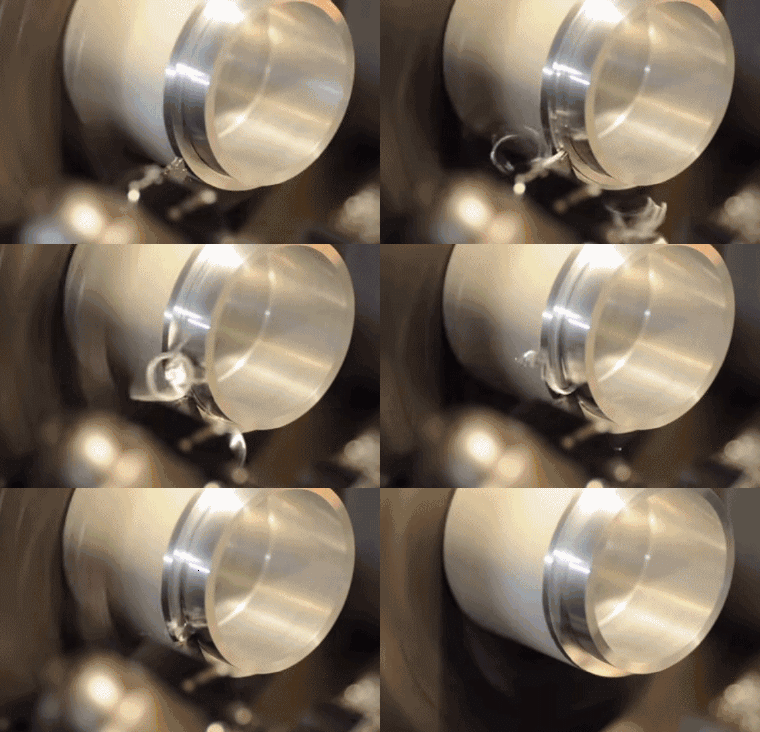
- Definition: A machining process where the workpiece rotates and the cutting tool moves in a straight or curved line within a plane. Generally performed on a lathe to machine external/internal cylindrical surfaces, end faces, conical surfaces, formed surfaces, and threads.
- Machining Precision and Surface Roughness: Turning precision is generally IT8~IT7, with a surface roughness of 1.6~0.8μm.
- Rough Turning: Aims to maximize turning efficiency without reducing cutting speed by using large depth of cut and feed rate, but precision is only IT11, with surface roughness Ra 20~10μm.
- Semi-Finishing and Finishing Turning: Uses high speed with smaller feed rate and depth of cut. Precision can reach IT10~IT7, with surface roughness Ra 10~0.16μm.
- "Mirror" Turning: High-speed finishing of non-ferrous metal parts with a finely honed diamond tool on a high-precision lathe can achieve IT7~IT5 precision and Ra 0.04~0.01μm surface roughness.
? 2. Milling
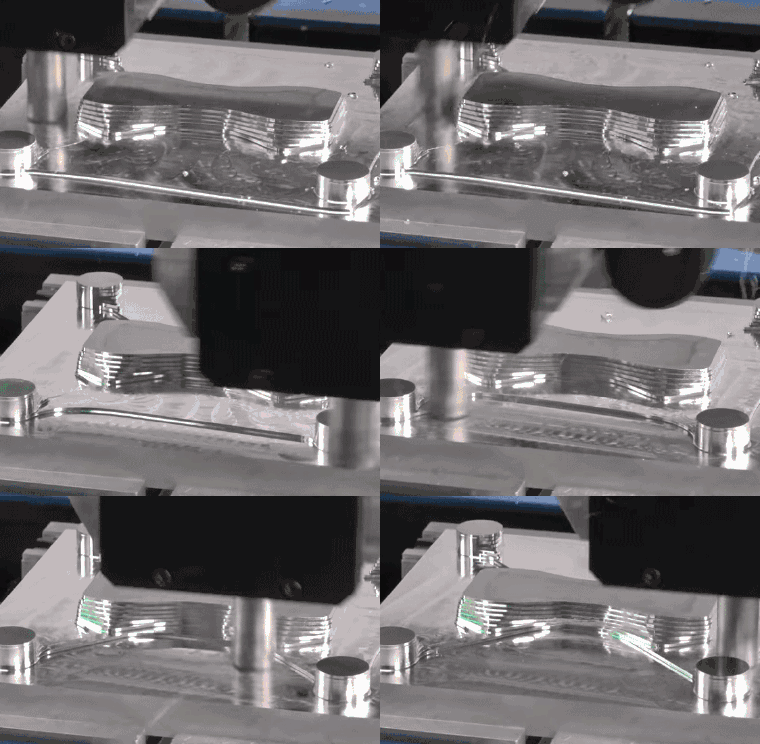
- Definition: A high-efficiency machining method using a rotating multi-edge cutting tool. Suitable for machining planes, grooves, various formed surfaces (e.g., splines, gears, threads), and special mold surfaces. Divided into climb milling and conventional milling based on the direction of the primary motion speed relative to the workpiece feed.
- Milling precision generally reaches IT8~IT7, with surface roughness 6.3~1.6μm.
- Rough Milling: Precision IT11~IT13, surface roughness 5~20μm.
- Semi-Finish Milling: Precision IT8~IT11, surface roughness 2.5~10μm.
- Finish Milling: Precision IT16~IT8, surface roughness 0.63~5μm.
? 3. Planing
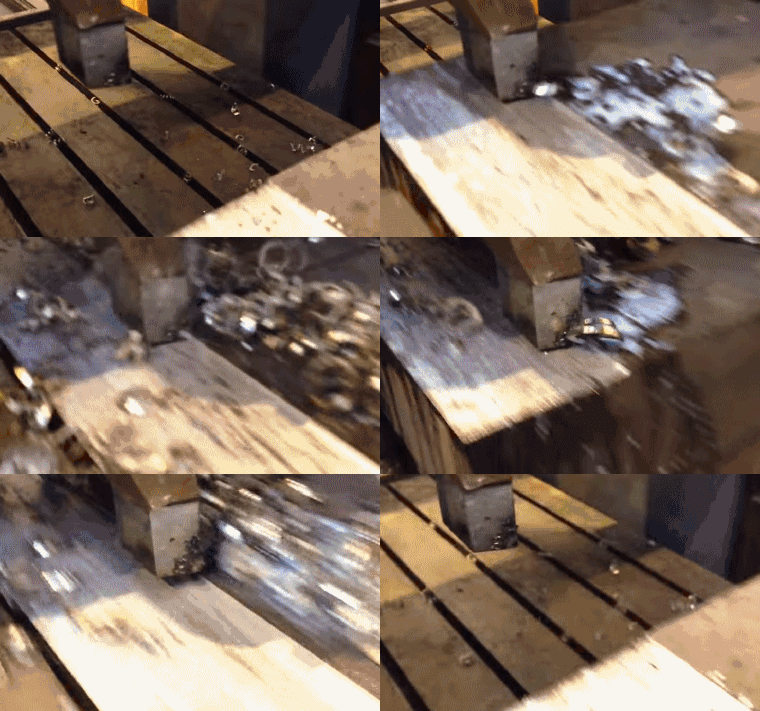
- Definition: A machining method where a planing tool performs horizontal reciprocal linear motion relative to the workpiece, mainly used for shaping parts.
- Planing precision generally reaches IT9~IT7, with surface roughness Ra 6.3~1.6μm.
- Rough Planing: Precision up to IT12~IT11, surface roughness 25~12.5μm.
- Semi-Finish Planing: Precision up to IT10~IT9, surface roughness 6.2~3.2μm.
- Finish Planing: Precision up to IT8~IT7, surface roughness 3.2~1.6μm.
? 4. Grinding
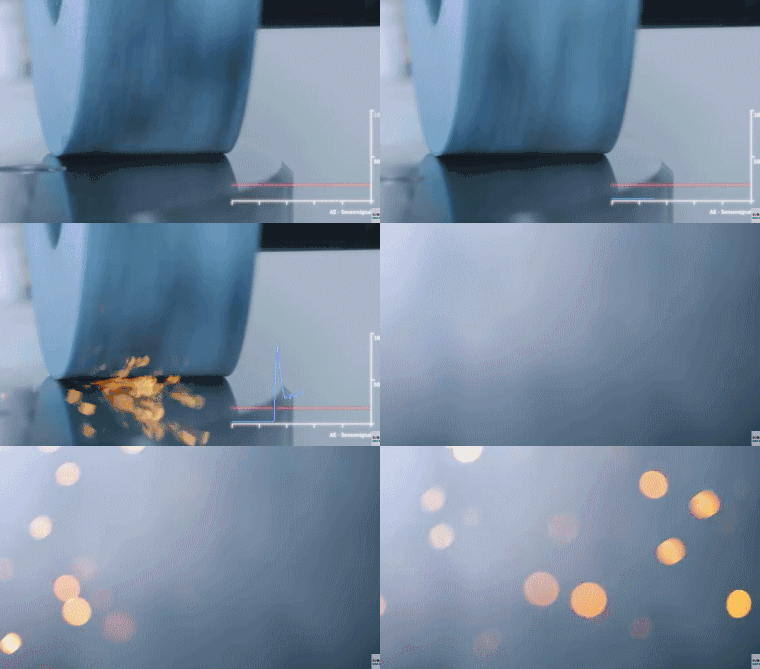
- Definition: A machining method that removes excess material from a workpiece using abrasive grains or grinding tools. Belongs to precision machining and is widely used in the machinery manufacturing industry.
- Grinding is typically used for semi-finishing and finishing, with precision up to IT8~IT5 or higher. Surface roughness for general grinding is 1.25~0.16μm.
- Precision Grinding: Surface roughness 0.16~0.04μm.
- Ultra-Precision Grinding: Surface roughness 0.04~0.01μm.
- Mirror Grinding: Surface roughness can reach below 0.01μm.
? 5. Drilling
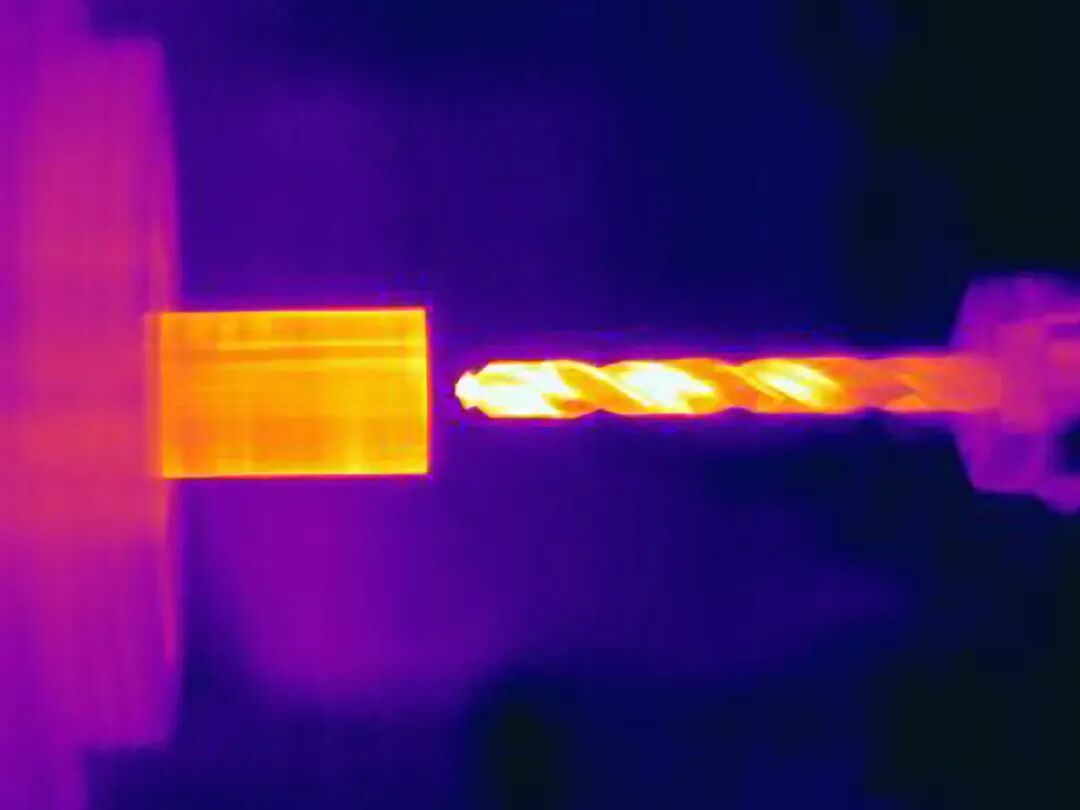
- Definition: A fundamental method for hole machining, can be performed on drilling machines, lathes, boring mills, or milling machines.
- Machining Precision: Generally up to IT10 (relatively low).
- Surface Roughness: 12.5~6.3μm.
- Subsequent Processes: Often followed by reaming or boring for semi-finishing and finishing.
? 6. Boring
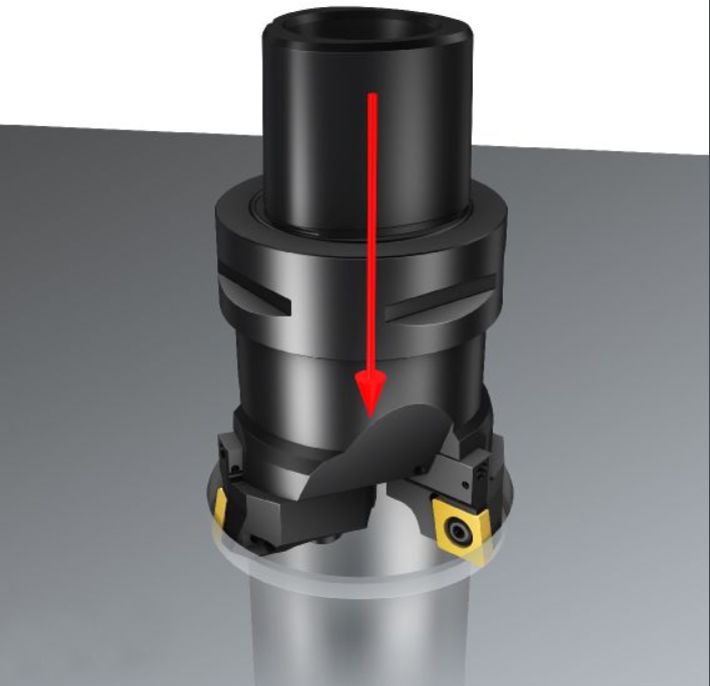
- Definition: A cutting process that enlarges a hole or other circular contour using a tool. Applications range from semi-roughing to finishing, often using a single-point boring tool (boring bar).
- Machining Precision and Surface Roughness:
- Boring of Ferrous Materials: Precision IT9~IT7, surface roughness 2.5~0.16μm.
- Precision Boring: Precision IT7~IT6, surface roughness 0.63~0.08μm.
? Summary Table of IT Grades for Various Machining Methods
| Machining Method | IT01 | IT0 | IT1 | IT2 | IT3 | IT4 | IT5 | IT6 | IT7 | IT8 | IT9 | IT10 | IT11 | IT12 | IT13 | IT14 | IT15 | IT16 |
|---|---|---|---|---|---|---|---|---|---|---|---|---|---|---|---|---|---|---|
| Lapping | √ | √ | √ | √ | √ | √ | √ | |||||||||||
| Honing | √ | √ | √ | √ | ||||||||||||||
| Cylindrical Grinding | √ | √ | √ | √ | ||||||||||||||
| Surface Grinding | √ | √ | √ | √ | ||||||||||||||
| Diamond Grinding | √ | √ | √ | |||||||||||||||
| Diamond Boring | √ | √ | √ | |||||||||||||||
| Broaching | √ | √ | √ | |||||||||||||||
| Reaming | √ | √ | √ | √ | √ | |||||||||||||
| Turning | √ | √ | √ | √ | √ | |||||||||||||
| Boring | √ | √ | √ | √ | √ | |||||||||||||
| Milling | √ | √ | √ | √ | ||||||||||||||
| Planing/Shaping | √ | √ | ||||||||||||||||
| Drilling | √ | √ | √ | √ | ||||||||||||||
| Rolling/Extruding | √ | √ | ||||||||||||||||
| Stamping | √ | √ | √ | √ | √ | |||||||||||||
| Die Casting | √ | √ | √ | √ | ||||||||||||||
| Powder Metallurgy (Forming) | √ | √ | √ | |||||||||||||||
| Powder Metallurgy (Sintering) | √ | √ | √ | √ | ||||||||||||||
| Sand Casting, Gas Cutting | √ | √ | √ | |||||||||||||||
| Forging | √ | √ |
Explanation: The "√" indicates the range of tolerance grades achievable by that machining method.