¶ CNC Machining: From Digital Blueprint to Precision Reality
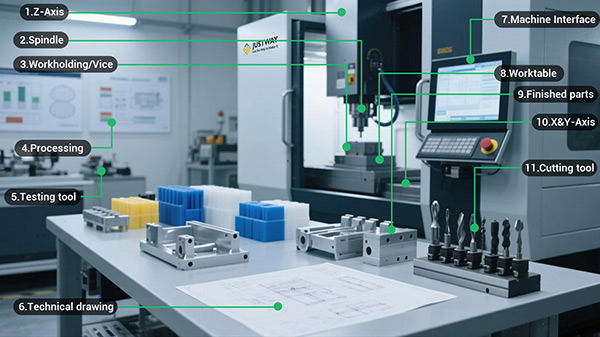
¶ Mastering Material, One Cut at a Time
In modern manufacturing, CNC machining stands as the foundational process for transforming digital concepts into high-functioning, tangible parts. Here’s how it works: your meticulously designed CAD model is translated into a set of precise instructions that guide cutting tools to sculpt the final geometry from a solid block of metal, plastic, or composite. At its core, this is a process defined by control and predictability, enabling the repeatable production of everything from concept prototypes to mission-critical components with a level of accuracy unattainable by hand.
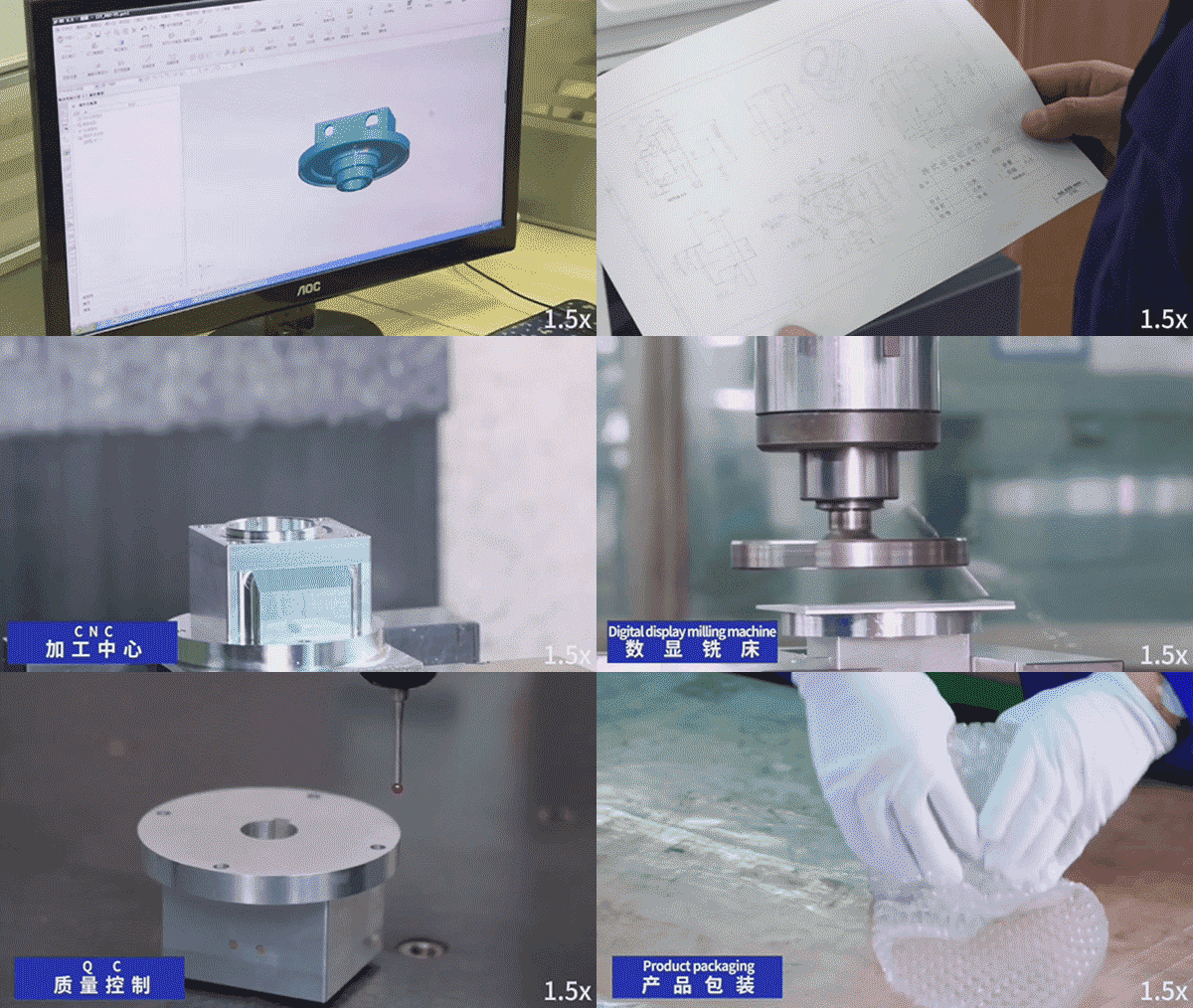
3D CAD Model > CAM Toolpath Planning > Machine Setup > Material Removal > Final Part & Inspection
¶ Why Engineers Rely on CNC Machining
The choice for CNC isn't just about capability—it's about superior performance where it matters most.
- Precision as Standard: For parts where fit and function are non-negotiable, CNC delivers. Established machining processes consistently hold tolerances as tight as ±0.025 mm or better, ensuring every component matches the original design intent.
- The Integrity of Solid Materials: Unlike layer-based additive methods, CNC parts are created from solid stock. This means they inherit the full, proven mechanical properties, density, and thermal characteristics of the chosen material—be it aluminum, stainless steel, or POM questions about material uniformity.
- Mastery of Complex Geometry: From deep pockets and internal channels to fine threads and complex contoured surfaces, multi-axis CNC machining unlocks near-limitless design freedom, overcoming the limitations of conventional fabrication.
- A Seamless Bridge from Prototype to Production: For low to mid-volume runs (tens to thousands of parts), CNC offers an unbeatable balance of flexibility and cost-effectiveness. It allows for rapid design iteration and transition to end-use parts without the high cost or lead time of tooling, dramatically accelerating time-to-market.
- A Superior Canvas for Finishes: The machined surface provides an ideal foundation for post-processing. With the right approach, you can achieve functional or cosmetic finishes like anodizing, plating, or painting directly from the machine bed.
¶ ? 💲 Instant CNC machining quote
Support materials: Aluminum, Stainless steel, Brass, Copper, Titanium, Mild steel, Alloy steel, Tool steel, Spring steel, ABS, Polycarbonate (PC), Nylon, Polypropylene (PP), POM, PTFE (Teflon), PMMA (Acrylic), Polyethylene (PE), PEEK, Bakelite, FR4, Rubber, Carbon Fiber, etc.
¶ 🔨 1.CNC Fundamentals
How it works, core concepts, and comparisons.
- The Ultimate Guide to CNC Machining for Buyers and Engineers
- CNC vs 3D Printing vs Injection Molding: The Complete Buyer's Decision Matrix
- Precision Explained: A Practical Guide to Machining Tolerances
- 16 Proven Design Strategies to Reduce Your CNC Machining Costs
¶ 📐 2.Design for Manufacturing (DFM)
Optimizing part designs for CNC, cost, and manufacturability.
- The 6 Essential CNC Design Rules Every Engineer Must Know
- Articles 3 to 10 fully cover CNC design rules (fillets, thin walls, thread depth, hole design, tolerances, clamping, etc.)
- Designing Holes, Pockets, Threads, and Thin Walls
In addition, cost reduction articles #3 (Thin Wall), #4 (thread depth), and #5 (Standard Hole) are specifically dedicated to discussing these topics - Undercuts in CNC: Design Tips and Solutions
- How to Design Strong and Machinable Ribs & Bosses
- Designing for Different Materials: Metals vs. Plastics
¶ 🪑 3.Materials for CNC Machining
Selecting the right material for function, finish, and budget.
- CNC Material Selection Guide: Metals, Plastics, Composites
Cost Reduction Article #10 "Processability of Materials" + #11 "Billet Price" - Machining Aluminum Alloys: 6061, 7075, and More
- Guide to Machining Stainless Steel (304, 316, 303)
- Machining Engineering Plastics: POM, Nylon, PEEK
- How Material Choice Impacts Machining Time and Cost
¶ 🔡 4.Machining Processes & Troubleshooting
Deep dive into techniques and solving common problems.
- CNC Cutting Tools: Types, Materials, and Coatings
- Optimizing Feeds, Speeds, and Depth of Cut
- How to Achieve Target Surface Finish (Ra)
- Solving Common CNC Defects: Chatter, Burrs, Tool Marks
- Guide to Multi-Axis (3+2, 5-Axis) Machining
¶ ✨ 5. Post-Processing & Finishes
Selecting the right material for function, finish, and budget.
- CNC Post-Processing Options Overview
- Bead Blasting, Polishing, and Brushing: A Comparison
- Anodizing Aluminum: Colors, Types, and Specifications
- Plating (Nickel, Chrome) and Powder Coating
- How to Choose a Finish for Function and Aesthetics
¶ 📊 6. Quality Control & Standards
Selecting the right material for function, finish, and budget.
- Quality Control in CNC Machining: From RFQ to Delivery
- Measuring and Inspecting CNC Parts (CMM, Calipers, etc.)
- Understanding Technical Drawings and GD&T
- Overview of Machining Standards (ISO, ASME)
¶ 🏭 7. Applications & Industry Case Studies
Selecting the right material for function, finish, and budget.